Havva look at this:
http://www.cbc.ca/story/canada/national ... 50306.html
and:
http://www.canada.com/montreal/montreal ... 068012bd7c
and:
http://www.aero-news.net/index.cfm?Cont ... 900e494477&
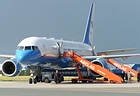
Another Airbus rudder problem??
Moderator: Latest news team


There are ”problems” ore ”incidents” with this part of an aircraft no matter the type ore manufacturer! I suppose they will find the reason why this plane lost part of its rudder and that won’t leave them in fear for the future.
The AA crash was truly a horrible accident that left us with more question then answers about “Airbus rudders”.
/

The AA crash was truly a horrible accident that left us with more question then answers about “Airbus rudders”.
/
AIRBUS RULES
8) Airbus rules, even with these small failures.... 8)
Even though there is no indication that this was in any way related to the structural failure (above and beyond critical limits BTW) of AA587, it's funny to see people jumping to conclusions. I'll be waiting patiently for the first one to start about the 'plastic rudders' of Airbuses, and how they are 'less strong' than other rudders.
From what i read here, a PART fell off, most likely one of the moveable parts of the rudder. In that case there is no talk of a structural failure of the tail assembly, and thus absolutely no connection to AA587.
From what i read here, a PART fell off, most likely one of the moveable parts of the rudder. In that case there is no talk of a structural failure of the tail assembly, and thus absolutely no connection to AA587.
Dear "TEACH", excuse me, but did I hear you say "it's funny to see people jumping to conclusions...?????
Then, what's this: "In that case there is no talk of a structural failure of the tail assembly, and thus absolutely no connection to AA587"?????
whatever...........
In the interests of fairness to the airline, allow me to quote from their web site: "Our fleet consists of 14 aircraft, including the following models: Airbus A310 and Airbus A330. Our highly qualified technical personnel inspect and maintain each of our aircraft under optimal conditions."
yeah, right!
that explains why a rudder nearly fell off within a few days of a 'complete inspection' (quote from an Air Transat rep in another news account, and also explains this:
http://www.gpiaa-portugal-report.com/
Then, what's this: "In that case there is no talk of a structural failure of the tail assembly, and thus absolutely no connection to AA587"?????
whatever...........
In the interests of fairness to the airline, allow me to quote from their web site: "Our fleet consists of 14 aircraft, including the following models: Airbus A310 and Airbus A330. Our highly qualified technical personnel inspect and maintain each of our aircraft under optimal conditions."
yeah, right!
that explains why a rudder nearly fell off within a few days of a 'complete inspection' (quote from an Air Transat rep in another news account, and also explains this:
http://www.gpiaa-portugal-report.com/

teach wrote:I'll be waiting patiently for the first one to start about the 'plastic rudders' of Airbuses, and how they are 'less strong' than other rudders.
The problem is not the 'plastic' tails of airbus. This has nothing to do with waht happened with AA A310. The problem has to do with the way the pilot did the rudder input in the cockpit and how this was transmitted to the tail. In on way or another the pilot made such an input (by pushing the pedals from one side to the other) that the tail went over its load limit and caused finally the crash of this plane. So it has to something to do with the fact the pedal input is transmitted to the tail. It seems the pilot came in an unknown and strange situation.
Maybe the problem with this Air Transat has nothing to do with this. I'm sure the canadian safety board will do a good investigation and they will probably compare this incident with the crash of the AA A310.
But it could as well have no connection at all and just be a totally different problem. Let's wait until the investigation has started and will provide us with more information.
-
Bruspotter
- Posts: 2068
- Joined: 04 Sep 2004, 00:00
- Location: (Antwerp/Belgium)
- Contact:
Hello
As said before by some members....it might have to do with Airbus construction faillure.
Maye it is, who will say it , but a thing is that maintenance has even much to do with that as construction.
Do some of you guys watch to 'aircrash-investigation' at 'National Geographical channel'? (NAT GEO). If you followed all the (old series...there are new ones coming soon) you will probably remember the 2 biggest maintenance errors in the serie!
1-Alaska Airlines MD-83(correct me if I'm wrong) , rudder fell out during flight.(tail rudder). It was jammed because of bad maintenance...THERE WAS NO TIME FOR IT .....(yeah right) , and so the airplane missed he's regular 'check' , when they actually knew that the rudder had to be changed.... So what happened? The tail-rudder (or Aerolons or how do you call that stuff....(to point the aircraft up to the sky during take of))jammed...and at last the cable broke up...so the plane crashed into the Ocean terrible.
2- The second 'look-alike' crash was this one. Air Transat A330-200 had a bad fuel pump-leading and so they wanted to rechange it...but they didn't had the original 'Airbus' pipes at the maintenance hangar right there...and they couldn't wait for it..so they took another ,almost simular, pipe for that. The pipe was several millimeters (and people in the mechanical world a FULL mm is like a mile.)wider/slimmer(don't know exactely)and during the long transatlantic flight to Lisbon , the pipe broke because the pipes had been ('geschuurd'...how do you say in ENG?)against each other and there was a leak. The 'FO' noticed this and told the captain , wich said it probably was an computer-error. But it kept during...so after a long time of hezitating , the pilot decided to land at 'Lajes' in the Azores.
The landing was a master peace and miraculous enough nobody got hurt.
So this was a technical error and by my opinion also a little bit a human fault combined.
This are only two cases , but they prove that man can do much more wrong than a construction fault if they're lazy or if they want to earn so much mony even risking others' live.
Best regards: Yannick
As said before by some members....it might have to do with Airbus construction faillure.
Maye it is, who will say it , but a thing is that maintenance has even much to do with that as construction.
Do some of you guys watch to 'aircrash-investigation' at 'National Geographical channel'? (NAT GEO). If you followed all the (old series...there are new ones coming soon) you will probably remember the 2 biggest maintenance errors in the serie!
1-Alaska Airlines MD-83(correct me if I'm wrong) , rudder fell out during flight.(tail rudder). It was jammed because of bad maintenance...THERE WAS NO TIME FOR IT .....(yeah right) , and so the airplane missed he's regular 'check' , when they actually knew that the rudder had to be changed.... So what happened? The tail-rudder (or Aerolons or how do you call that stuff....(to point the aircraft up to the sky during take of))jammed...and at last the cable broke up...so the plane crashed into the Ocean terrible.
2- The second 'look-alike' crash was this one. Air Transat A330-200 had a bad fuel pump-leading and so they wanted to rechange it...but they didn't had the original 'Airbus' pipes at the maintenance hangar right there...and they couldn't wait for it..so they took another ,almost simular, pipe for that. The pipe was several millimeters (and people in the mechanical world a FULL mm is like a mile.)wider/slimmer(don't know exactely)and during the long transatlantic flight to Lisbon , the pipe broke because the pipes had been ('geschuurd'...how do you say in ENG?)against each other and there was a leak. The 'FO' noticed this and told the captain , wich said it probably was an computer-error. But it kept during...so after a long time of hezitating , the pilot decided to land at 'Lajes' in the Azores.
The landing was a master peace and miraculous enough nobody got hurt.
So this was a technical error and by my opinion also a little bit a human fault combined.
This are only two cases , but they prove that man can do much more wrong than a construction fault if they're lazy or if they want to earn so much mony even risking others' live.
Best regards: Yannick
-
HorsePower
- Posts: 1589
- Joined: 12 Jan 2005, 00:00
- Location: France
small corrections :
Air Transat:
I don't know too much about it but it's hard to believe that the mechanic was able to fix an other pipe with different diameter from the original one... Perhaps the seal was missing?
my 0,02€
Seb.
:
It wasn't the rudder but the stabilizator (horizontal part)....rudder fell out during flight.(tail rudder)
It wasn't a cable but the "mechanic screw" end....and at last the cable broke up
Air Transat:
I don't know too much about it but it's hard to believe that the mechanic was able to fix an other pipe with different diameter from the original one... Perhaps the seal was missing?
my 0,02€
Seb.
Actually what happened is that they got a replacement engine, but it lacked a hydraulic pump. They used a pump from a different engine, but used a hydraulic pipe from the original engine. The result was that the hydraulic pipe chafed against a fuel pipe, causing the fuel pipe to rupture. Apparently the difference between the old and new pipes was just a few mm, leaving enough clearance from the fuel pipe when the proper pipe was used with the proper pump. They forced the fuel and hydraulic pipes apart, but when the system was pressurized, they came back together.Air Transat:
I don't know too much about it but it's hard to believe that the mechanic was able to fix an other pipe with different diameter from the original one... Perhaps the seal was missing?
When the pipe started leaking, the pilots failed to properly diagnose the fuel leak, leading to a massive fuel loss and the plane gliding to the airport. Luckily they were rerouted, if they had been on their original route, they would not be close enough to an airport.
-
Bruspotter
- Posts: 2068
- Joined: 04 Sep 2004, 00:00
- Location: (Antwerp/Belgium)
- Contact:
Hello
HorsePower:
And , you know I can't explain you that well in English , my vocabulary isn't THAT big so...
But in Dutch it was
But Thanks both of you.
Best regards: Yannick
HorsePower:
Yes , that was the word I was looking for.It wasn't the rudder but the stabilizator (horizontal part).
And , you know I can't explain you that well in English , my vocabulary isn't THAT big so...
But in Dutch it was
So that's about how it should have been.De bevestigingsbeugel was bij het andere/verkeerde type van leiding naar de motor , niet bijgeleverd , en dus zat de pijp niet vast genoeg en zo konden 2 pijpen over elkaar schuren tot er een lek ontstond.
But Thanks both of you.
Best regards: Yannick

Let's not mix up different accidents.
Bruspotter,
The reason for the crash of the MD80 of Alaska was a totally different problem. In the MD80 you have 1 "big screw" (don't know the exact word in English) in the tail which is connected to the stabilizer. By moving this screw you will change the position of the stabilizer. Such a divise needs to be greased regularly to guarantee a good functioning of the piece. Now due to cost saving measures Alaskan adopted, they decided to grease that part less regularely. The result was the loss of the plane.
Now to come back to the initial topic, does someone know which part of the rudder nearly fell off ?
Chris
Bruspotter,
The reason for the crash of the MD80 of Alaska was a totally different problem. In the MD80 you have 1 "big screw" (don't know the exact word in English) in the tail which is connected to the stabilizer. By moving this screw you will change the position of the stabilizer. Such a divise needs to be greased regularly to guarantee a good functioning of the piece. Now due to cost saving measures Alaskan adopted, they decided to grease that part less regularely. The result was the loss of the plane.
Now to come back to the initial topic, does someone know which part of the rudder nearly fell off ?
Chris
-
itsdoctorv
- Posts: 31
- Joined: 19 Aug 2004, 00:00
- Location: London
It's not likely that over-correction was the problem, simply because AA587 pretty much showed that the rudder is so well attached that the tail assembly will fail first in case too big an aerodynamic load is created by large and opposite rudder displacements. My guess would be that some part of the rudder attachement structure failed, because it had some defect (from manufacture or fatigue).
Although it's not great news, losing part (or all) of your rudder does not have to be catastrophic. Just fly low, make slow turns and find a runway with no crosswind. Well, easier said than done
Although it's not great news, losing part (or all) of your rudder does not have to be catastrophic. Just fly low, make slow turns and find a runway with no crosswind. Well, easier said than done
UPDATE
From The Globe & Mail today, buried in another aviation story, I found this:
"Separately, the board (Transportation Safety Board of Canada) has started a Class 2 investigation into an Air Transat flight destined for Quebec City from Cuba last Sunday. In that case, part of the plane's rudder fell off the tail section and the aircraft returned to Cuba 30 minutes after takeoff, Air Transat said."
Here's the link:
http://www.theglobeandmail.com/servlet/ ... s/Canadian
(BTW, the "airline" Jetsgo (focus of this Globe article) declared bankruptcy last night, ending another horror story in Canadian aviation history, fortunately before what would have been an inevitable fatal event - I just find it ironic that the free market did what the mealy-mouthed politicians & entrenched bureaucrats didn't have the guts to do, and get them out of the skies)
From The Globe & Mail today, buried in another aviation story, I found this:
"Separately, the board (Transportation Safety Board of Canada) has started a Class 2 investigation into an Air Transat flight destined for Quebec City from Cuba last Sunday. In that case, part of the plane's rudder fell off the tail section and the aircraft returned to Cuba 30 minutes after takeoff, Air Transat said."
Here's the link:
http://www.theglobeandmail.com/servlet/ ... s/Canadian
(BTW, the "airline" Jetsgo (focus of this Globe article) declared bankruptcy last night, ending another horror story in Canadian aviation history, fortunately before what would have been an inevitable fatal event - I just find it ironic that the free market did what the mealy-mouthed politicians & entrenched bureaucrats didn't have the guts to do, and get them out of the skies)
95% of the rudder ripped away. The entire rudder including the front spar down to the actuator fittings is missing. The front spar of the rudder below the actuator fittings remains with only about two square feef of honeycomb structure attached.teach wrote:Even though there is no indication that this was in any way related to the structural failure (above and beyond critical limits BTW) of AA587, it's funny to see people jumping to conclusions. I'll be waiting patiently for the first one to start about the 'plastic rudders' of Airbuses, and how they are 'less strong' than other rudders.
From what i read here, a PART fell off, most likely one of the moveable parts of the rudder. In that case there is no talk of a structural failure of the tail assembly, and thus absolutely no connection to AA587.
How can anyone be comfortable with this ship shedding what they consider minor appendages?
I know what caused the failure. I know how to prevent composite rudders from breaking away from this ship.
The remnants of the rudder with before and after shots
http://coppermine.luchtzak.be/displayim ... &pos=-4357
http://coppermine.luchtzak.be/displayim ... 0072&pos=1
http://coppermine.luchtzak.be/displayim ... 0072&pos=0
http://coppermine.luchtzak.be/displayim ... &pos=-4357
http://coppermine.luchtzak.be/displayim ... 0072&pos=1
http://coppermine.luchtzak.be/displayim ... 0072&pos=0
Last edited by bits44 on 13 Mar 2005, 19:36, edited 2 times in total.