And they won't make the same mistake to order the entire lot in one go. ( ending in the Sabena disaster ) So no shipload of Q400NG's to replace all NB AB and B737.dsa330 wrote:i'd be quite amazed if they would, i taught the fuel consumption of those birds was way high...?pge71 wrote:I hope SN will not go for A318, I was part of the team of an airline who bought some A318 (called "the ugly duck"), which is a shorter and worse version of A319.
could be wrong tho.
i stand my ground, and i expect a few more 319's, 320's, maybe a 321, and then for the shorter, less demanding routes, embrears or alike... i don't think they'll be going turboprop or 318.
but that's just how I think of itso don't shoot me
Brussels Airlines' fleet renewal
Moderator: Latest news team
Re: Replacement of SN's Avro RJ and B737 fleet
-
NCB
Re: Replacement of SN's Avro RJ and B737 fleet
Everyone thinks that it's going to be Embraer.
At this point, I think that chances are 60/40 for CRJ's. Lufthansa, one of Bombardier's best customers, will push for CRJ's.
A new concept, food for thought:
Take a CRJ, put PW1000 engines on it and the product can almost match the efficiencies of a Q400NG.
The problems are that Bombardier has been very quiet about reengining the CRJ's. Either they are quietly working on it or they are keeping quiet to keep the Q400 sales runnning.
The question no longer is if, but when Bombardier will launch it and whether it could be soon enough for SN.
A reengining is a straight-forward process for the CRJ's, because of the position of the engines. No need for redesigning the wings or the landing gears.
If SN wants something in the league of the Avro RJ100, the CRJ1000 is a good bet.
If the CRJ1000 is reengined to GTF, the same engines as the CS100, its empty weight will be 10 tons lighter while configured with 10 less seats.
That means double-digit fuel savings over the CS100.
This proves what the CS100 is. It's an obsolete aircraft, the new A318 made in Canada.
It's a very heavy aircraft, only 13% lighter than an A318 while having 6% less capacity, and 44% heavier than the CRJ1000 while having only 10% more seating capacity.
But if SN wants it at any cost (and I don't think they do), it's fine with me.
Virgin Blue is not happy with the E-Jets. Recently, they said that they can not make money with them, specially with the E170, which echoes what I've been saying for a long time. The E-Jets looks nice from outside but it's not going to be a big improvement compared with the Avro RJ.
Lease costs for brand new E-Jets would be more than double, almost triple than for the old Avro RJ. With this difference in lease costs, each month you can pay the fuel bill for the Avro RJ equivalent to 150 hours of operation, almost 20 days. So you can already forget about the fuel burn improvement.
The lower maintenance costs (if we believe Embrear's propaganda, which is not exactly true according to friends who work on them) would still save SN some money but it's not going to make a big difference with the actual operations with Avro RJ.
We will see.
Dear Regi, I defended a plan for a Q400NG/A32X fleet, gradually to become an all A32X fleet, not a Q400NG only fleet. In fact, I said that SOME of the B737's could be replaced by Q400NG's.
Bring some material to the discussion, until now you have not contributed anything but wild criticism. You're being childish, grow up.
At this point, I think that chances are 60/40 for CRJ's. Lufthansa, one of Bombardier's best customers, will push for CRJ's.
A new concept, food for thought:
Take a CRJ, put PW1000 engines on it and the product can almost match the efficiencies of a Q400NG.
The problems are that Bombardier has been very quiet about reengining the CRJ's. Either they are quietly working on it or they are keeping quiet to keep the Q400 sales runnning.
The question no longer is if, but when Bombardier will launch it and whether it could be soon enough for SN.
A reengining is a straight-forward process for the CRJ's, because of the position of the engines. No need for redesigning the wings or the landing gears.
If SN wants something in the league of the Avro RJ100, the CRJ1000 is a good bet.
If the CRJ1000 is reengined to GTF, the same engines as the CS100, its empty weight will be 10 tons lighter while configured with 10 less seats.
That means double-digit fuel savings over the CS100.
This proves what the CS100 is. It's an obsolete aircraft, the new A318 made in Canada.
It's a very heavy aircraft, only 13% lighter than an A318 while having 6% less capacity, and 44% heavier than the CRJ1000 while having only 10% more seating capacity.
But if SN wants it at any cost (and I don't think they do), it's fine with me.
Virgin Blue is not happy with the E-Jets. Recently, they said that they can not make money with them, specially with the E170, which echoes what I've been saying for a long time. The E-Jets looks nice from outside but it's not going to be a big improvement compared with the Avro RJ.
Lease costs for brand new E-Jets would be more than double, almost triple than for the old Avro RJ. With this difference in lease costs, each month you can pay the fuel bill for the Avro RJ equivalent to 150 hours of operation, almost 20 days. So you can already forget about the fuel burn improvement.
The lower maintenance costs (if we believe Embrear's propaganda, which is not exactly true according to friends who work on them) would still save SN some money but it's not going to make a big difference with the actual operations with Avro RJ.
We will see.
Dear Regi, I defended a plan for a Q400NG/A32X fleet, gradually to become an all A32X fleet, not a Q400NG only fleet. In fact, I said that SOME of the B737's could be replaced by Q400NG's.
Bring some material to the discussion, until now you have not contributed anything but wild criticism. You're being childish, grow up.
-
Gliderpilot

- Posts: 157
- Joined: 14 Jun 2007, 11:56
- Contact:
Re: Replacement of SN's Avro RJ and B737 fleet
And having twice the range... In other words, the CS100ER can do everything the A318 can, but a lot more efficient.NCB wrote: This proves what the CS100 is. It's an obsolete aircraft, the new A318 made in Canada.
It's a very heavy aircraft, only 13% lighter than an A318 while having 6% less capacity, and 44% heavier than the CRJ1000 while having only 10% more seating capacity.
Btw, does any Lufthansa Group subsidiary ordered the CRJ1000?
I dont think the CRJ(1000) really is a contender for this order, and I don't see a GTF powered CRJ1000 happening anytime soon, if ever...
I really hope SN can wait for the MRJ (although I think that will be available too late). I really don't see the need to fly around 100-seaters with a 60% LF in their european network.
-
NCB
Re: Replacement of SN's Avro RJ and B737 fleet
I don't understand the range and more efficient concepts. The CS100 has less range than the A318, but maybe you are comparing it to the CRJ? Also, the CRJ can get 4000km range with the GTF, more than enough to cover the European network.And having twice the range... In other words, the CS100ER can do everything the A318 can, but a lot more efficient.
The CS100 would still be more efficient than the A318, but it would be absolutely inefficient compared to an actual CRJ1000 and even less against a GTF-powered CRJ1000 because of its unconceivably high weight and increased cross-section that generate more drag and will need to be compensated by more thrust and burn more fuel.
Good assessment. Until SN triples its current long-haul capacity and has 2 independent long-haul waves and unless it plans on becoming a LCC to compete 1 to 1 against Ryanair, there is no need for bigger short-haul aircraft and certainly not CS100's. As such, I don't see a need for a CRJ1000 myself, but I posted it to mark a clear comparison with the CS100 to make people realise how inefficient this aircraft is.I really hope SN can wait for the MRJ (although I think that will be available too late). I really don't see the need to fly around 100-seaters with a 60% LF in their european network.
The MRJ will be a great aircraft but I would also be happy with a GTF-engined CRJ.
Both these aircraft can almost match the Q400NG economy (except in lease price and maintenance costs), while giving SN the ability to offer the flexibility to operate frequencies. The GTF CRJ will be a better option in my opinion because it's a proven design with the only critical risk being the new engine. The MRJ is a totally new aircraft and will have some Entry-In-Service issues, as will the Cseries.
The E-jets re-engining is only planned for 2016, it's too late for SN. The E190 is also too heavy compared to CRJ1000, so re-engining it won't be as competitive as re-engining a CRJ1000.
Re: Replacement of SN's Avro RJ and B737 fleet
this is the third time in a row that you attack me personally despite I did not refer to your post, just to Q400NG. It was you who defended a flight between Brussels and Lille, and I came with some very straight forward figures, two times, and you kept silent.NCB wrote:Everyone thinks that it's going to be Embraer.
At this point, I think that chances are 60/40 for CRJ's. Lufthansa, one of Bombardier's best customers, will push for CRJ's.
A new concept, food for thought:
Take a CRJ, put PW1000 engines on it and the product can almost match the efficiencies of a Q400NG.
The problems are that Bombardier has been very quiet about reengining the CRJ's. Either they are quietly working on it or they are keeping quiet to keep the Q400 sales runnning.
The question no longer is if, but when Bombardier will launch it and whether it could be soon enough for SN.
A reengining is a straight-forward process for the CRJ's, because of the position of the engines. No need for redesigning the wings or the landing gears.
If SN wants something in the league of the Avro RJ100, the CRJ1000 is a good bet.
If the CRJ1000 is reengined to GTF, the same engines as the CS100, its empty weight will be 10 tons lighter while configured with 10 less seats.
That means double-digit fuel savings over the CS100.
This proves what the CS100 is. It's an obsolete aircraft, the new A318 made in Canada.
It's a very heavy aircraft, only 13% lighter than an A318 while having 6% less capacity, and 44% heavier than the CRJ1000 while having only 10% more seating capacity.
But if SN wants it at any cost (and I don't think they do), it's fine with me.
Virgin Blue is not happy with the E-Jets. Recently, they said that they can not make money with them, specially with the E170, which echoes what I've been saying for a long time. The E-Jets looks nice from outside but it's not going to be a big improvement compared with the Avro RJ.
Lease costs for brand new E-Jets would be more than double, almost triple than for the old Avro RJ. With this difference in lease costs, each month you can pay the fuel bill for the Avro RJ equivalent to 150 hours of operation, almost 20 days. So you can already forget about the fuel burn improvement.
The lower maintenance costs (if we believe Embrear's propaganda, which is not exactly true according to friends who work on them) would still save SN some money but it's not going to make a big difference with the actual operations with Avro RJ.
We will see.
Dear Regi, I defended a plan for a Q400NG/A32X fleet, gradually to become an all A32X fleet, not a Q400NG only fleet. In fact, I said that SOME of the B737's could be replaced by Q400NG's.
Bring some material to the discussion, until now you have not contributed anything but wild criticism. You're being childish, grow up.
Yes, go ahead with all your silly ideas. Now you call re-engining an existing aircraft a straight forward job. It is so simple: just unscrew the old engine and bolt on a brand new one.
You know what? Get tired of me again, because I am such an ignorant person, and don't come back a third time.
You're the weakest link.
Bye bye.
Re: Replacement of SN's Avro RJ and B737 fleet
What about a GTF engined Tu134? Would love to see one in SN colors! 
-
NCB
Re: Replacement of SN's Avro RJ and B737 fleet
this is the third time in a row that you attack me personally despite I did not refer to your post, just to Q400NG
Mr. regi,So no shipload of Q400NG's to replace all NB AB and B737.
I made the case for Lille and if you still want to ignore it, I can't help you. Your ignorance is either voluntary or involuntary, either way I don't think that anyone is interested to know why it's more interesting to have a flight from Lille rather than driving the 120km to catch a flight to destinations in Europe in heavy traffic at 8 in the morning. Via Michelin is a best-case scenario but flights are typically around rush hours, then you can forget about getting from Lille to Brussels in less than 2 hours.
Also, you made the point that RAM and Air Algerie operate to Lille and that they offer facilities to transfer to their entire entwork in Africa but have you checked whether there actually are established connections to all their African destinations and whether the fares respond to your description of "darn cheap".
I expect some quality in posts, otherwise I don't even bother replying.
For instance, I haven't bothered replying to some poster's dream that SN will take up bigger aircraft and have a fleet consisting of 110 seat aircraft as the smallest aircraft in the fleet.
Alliances and more long-haul aircraft are the answer to increasing short-haul passenger demand from 4 million to 6 million passengers per year to realise this dream.
Really?
50% more traffic, 2 million more passengers, is what it takes to go from a short-haul fleet with an average fleet-wide average capacity of 108 seats flying at 60% load factors to a "bigger capacity" fleet with a fleet-wide average capacity of 122 seats flying at 80% load factors.
Alliances and more long-haul aircraft are going to achieve that, really? Rather the opposite, no?
Obviously not, because alliances like codeshares are a form of operational merger. In operational mergers, the idea is to manage capacity in a better way so that you can operate the same volume with less capacity, which leads to reducing cost by reducing capacity. If you don't want to compromise schedules and frequencies, then that capacity reduction must be made by operating smaller aircraft, obviously.
We definitely need to get a notch higher on the arguments and discussions if we want to make it interesting.
Re: Replacement of SN's Avro RJ and B737 fleet
this is true but you are also missing an other point, because a codeshare you open up new destinations and thus new pax (locals and transfer).NCB wrote: Alliances and more long-haul aircraft are going to achieve that, really? Rather the opposite, no?
Obviously not, because alliances like codeshares are a form of operational merger. In operational mergers, the idea is to manage capacity in a better way so that you can operate the same volume with less capacity, which leads to reducing cost by reducing capacity. If you don't want to compromise schedules and frequencies, then that capacity reduction must be made by operating smaller aircraft, obviously.
-
NCB
Re: Replacement of SN's Avro RJ and B737 fleet
Look at the huge interconnection of all the European hubs and all the same destinations served by different airlines out of their respective hubs. In intra-Europe there are no longer opportunities to create new destinations and new pax. The only way to create new pax is like Ryanair does, by offering ridiculously low prices to generate new demand: because the cheaper it is, the more demand there is.
Also for long-haul there are LHR, CPH, BRU, CDG, AMS, FRA, ZRH, MAD, FCO, LIS, VIE, DUB and even secondary hubs like MUC, MXP, ARN, BCN, ATH, BUD, LGW, MAN are serving Europe very well.
SN has no special European destinations that other airlines don't serve (SN could if they operated Q400NG's or similar aircraft to short, thin routes to destinations that are underserved!), and no codeshare partners offer direct links to destinations that are not accessible through other hubs. So no, the alliance or codeshares are not going to generate significantly more pax for SN's EUROPEAN network to increase by 50% in traffic.
SN serves long-haul to quite competition-poor destinations so there the European network can benefit. But again, the day that there are enough connecting passengers, aircraft, destinations and schedules to fill 10 A333's only with connecting passengers every day of the year is very far.
That's why, obviously, it's not interesting to consider that SN should go bigger on short-haul, at least not until it has 20 widebodies like LX, so defintely not in this decade.
Also consider that when you only have one long-haul wave like at BRU in the morning, your short-haul aircraft still need to fly short-haul the rest of the day. That means that small aircraft can compensate high capacity requirement by adding frequency or number of aircraft (like 2 aircraft operating the same route 5 minutes apart), but bigger aircraft can not compensate low capacity by cutting itself into pieces to operate different routes at the same time.
With codeshares you can also lose passengers if your partner airline serving the same route has a better product or schedule than your airline.
As shown here, it's very easy to say that alliances will increase passenger numbers, but in reality it's such a complex system that you must be doing that as your full time job and have access to data of all airlines to see for each airline which of its routes is or is not benefitting from the codeshares. Unless that is your job, it's ridiculous to suggest a billion dollar fleet replacement plan on presumptions and instincts of alliance-induced traffic increase.
Also for long-haul there are LHR, CPH, BRU, CDG, AMS, FRA, ZRH, MAD, FCO, LIS, VIE, DUB and even secondary hubs like MUC, MXP, ARN, BCN, ATH, BUD, LGW, MAN are serving Europe very well.
SN has no special European destinations that other airlines don't serve (SN could if they operated Q400NG's or similar aircraft to short, thin routes to destinations that are underserved!), and no codeshare partners offer direct links to destinations that are not accessible through other hubs. So no, the alliance or codeshares are not going to generate significantly more pax for SN's EUROPEAN network to increase by 50% in traffic.
SN serves long-haul to quite competition-poor destinations so there the European network can benefit. But again, the day that there are enough connecting passengers, aircraft, destinations and schedules to fill 10 A333's only with connecting passengers every day of the year is very far.
That's why, obviously, it's not interesting to consider that SN should go bigger on short-haul, at least not until it has 20 widebodies like LX, so defintely not in this decade.
Also consider that when you only have one long-haul wave like at BRU in the morning, your short-haul aircraft still need to fly short-haul the rest of the day. That means that small aircraft can compensate high capacity requirement by adding frequency or number of aircraft (like 2 aircraft operating the same route 5 minutes apart), but bigger aircraft can not compensate low capacity by cutting itself into pieces to operate different routes at the same time.
With codeshares you can also lose passengers if your partner airline serving the same route has a better product or schedule than your airline.
As shown here, it's very easy to say that alliances will increase passenger numbers, but in reality it's such a complex system that you must be doing that as your full time job and have access to data of all airlines to see for each airline which of its routes is or is not benefitting from the codeshares. Unless that is your job, it's ridiculous to suggest a billion dollar fleet replacement plan on presumptions and instincts of alliance-induced traffic increase.
-
tolipanebas

- Posts: 2442
- Joined: 12 May 2004, 00:00
Re: Replacement of SN's Avro RJ and B737 fleet
"Quality posts", as in what is known to be currently on the table at SN through different sources you clearly don't have access too, or 'quality posts' as in what you'd dream to be the best option for your fictitious airline based at BRU?NCB wrote:I expect some quality in posts, otherwise I don't even bother replying.
If quality posts needs to match the first criterium, then you've contributed nothing to this topic yet, as I know for a fact none of your concepts comes even close to what is even looked at right now by the real airline being discussed here.
This discussion needn't be interesting, it needs to give a better understanding of what is happening right now at SN and what the future will bring for them. If that in itself isn't interesting to you, then so be it.NCB wrote: We definitely need to get a notch higher on the arguments and discussions if we want to make it interesting.
There's no need to constantly be willing to sex up this discussion with ever more ambitious, weirder and completely unrealistic projects, ranging from sending 20 A319s to AFI, over replacing most of the medium haul fleet by totally unsuitable planes like the Q400, to even designing your own planes now!
If you absolutely want to discuss conceptual planes like you did in your last proposal, then please create a new topic about it, but don't dump it in this 'latest news' topic, as you aren't contributing any news/rumour at all.
I can tell you hindsight is soon going to show you wrong on this one, that's for sure....NCB wrote: That's why, obviously, it's not interesting to consider that SN should go bigger on short-haul, at least not until it has 20 widebodies like LX, so defintely not in this decade.

I've said it numerous times before and this is based on facts, not speculation: the average seating capacity of the feeding fleet needs to go up, because SN has already reached the point where feed is taking away PtP capacity, which is one of the main reasons why they have decided to move part of their long haul outbounds to the early afternoon.

-
brusselsairlinesfan
- Posts: 916
- Joined: 29 Mar 2007, 14:44
Re: Replacement of SN's Avro RJ and B737 fleet
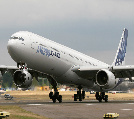
So the Airbus A318 is still in the race?! I must admit that I do like the Babybus
Re: Replacement of SN's Avro RJ and B737 fleet
There will be no a318. believe me
-
NCB
Re: Replacement of SN's Avro RJ and B737 fleet
SN average load factor year to date (May), including long-haul fleet: 59.4%.I've said it numerous times before and this is based on facts, not speculation: the average seating capacity of the feeding fleet needs to go up, because SN has already reached the point where feed is taking away PtP capacity, which is one of the main reasons why they have decided to move part of their long haul outbounds to the early afternoon.
The morning European feed flights are not even 10% of SN's total daily schedule. SN will certainly not base its fleet replacement decision on that, if SN needs the capacity it can use smaller aircraft with frequency to fly the same capacity as fewer big aircraft. The problem is definitely not slot-restricted LHR because they're flying the Avro's there instead of bigger aircraft. Just ride along with some of SN's flights in the winter, you almost feel like you're on your private jet.
The fleet will be temporarily be dominantly RJ100/B737/A319 around mid-2012, only because the RJ85's are the first to leave the fleet in 2011/2012. It will be temporary while the replacement starts to come online, hopefully by mid-2012. That's why a decision regarding fleet replacement must be made this year.
The CS100? We're talking 2014, more realistically 2016/2017 with expectable program delays. It's Bombardier's first 100+ seat, first full FBW and first largely composite aircraft, the first ever application of the GTF engine. Put these things together and it's impossible for it to be ready by 2013.
It's too much new technology for one small regional jet manufacturer. I'd be happy if they manage to deliver the first aircraft to Swiss by 2016.
Sure, the increasingly large African network will help SN fill its feeders, but unless SN starts sending 20 A319/A320's to subsaharian Africa in different waves, I don't see SN's African network growing fast enough at all to justify larger aircraft on the short-haul fleet.
I think that the RJ fleet will be replaced by similar or slightly smaller aircraft but in larger numbers, resulting in slightly less seat per aircraft but more aircraft (total capacity should remain unchanged), more flexibility, better frequencies, improved load factors and dramatically reduced trip cost.
-
dsa330
Re: Replacement of SN's Avro RJ and B737 fleet
i wouldn't be so sure about that, i can tell you i saw quite a few passengers on the planes (not every day but...)
not saying that every flight was 100% load but, for a winter season last winter i saw quite a few people
don't know what the numbers where actually compared to last year
not saying that every flight was 100% load but, for a winter season last winter i saw quite a few people
don't know what the numbers where actually compared to last year
-
tolipanebas
- Posts: 2442
- Joined: 12 May 2004, 00:00
Re: Replacement of SN's Avro RJ and B737 fleet
Interesting reading for all those who still think small is beautiful....
http://www.bloomberg.com/news/2010-09-0 ... cmpid=yhoo
An interesting quote:
The drawback[of regional jets] is spreading [fixed] costs over about a third as many seats as in a Boeing 737. They make sense if you’re focused on market share, hub preservation and other really outmoded concepts, but if you’re focused on profitability, then they begin to look awful indeed.
http://www.bloomberg.com/news/2010-09-0 ... cmpid=yhoo
An interesting quote:
The drawback[of regional jets] is spreading [fixed] costs over about a third as many seats as in a Boeing 737. They make sense if you’re focused on market share, hub preservation and other really outmoded concepts, but if you’re focused on profitability, then they begin to look awful indeed.
-
jan_olieslagers
- Posts: 3082
- Joined: 24 Jun 2006, 08:34
- Location: Vl.Brabant
- Contact:
Re: Replacement of SN's Avro RJ and B737 fleet
I understand one of the reasons quoted for the demise of 50-seat jets is the availability of more comfortable turboprops, such as the Q400 ...tolipanebas wrote:Interesting reading for all those who still think small is beautiful....
http://www.bloomberg.com/news/2010-09-0 ... cmpid=yhoo
-
tolipanebas
- Posts: 2442
- Joined: 12 May 2004, 00:00
Re: Replacement of SN's Avro RJ and B737 fleet
The common understanding is only VOLUME can sufficiently lower unit costs in a permanently high fuel cost environment to bring sustained profitability and as such airlines allover the world now want to move up the seat count numbers of their fleet as much as they can, ideally to 737/A319 levels, or -when this is not possible due to a lack of elasticity- to something in between, which I wouldn't call 'more comfortable' than the 50 seaters then, BTW!jan_olieslagers wrote:I understand one of the reasons quoted for the demise of 50-seat jets is the availability of more comfortable turboprops, such as the Q400 ...
In this context, the idea SN should reduce the seat count number of their fleet is thus so 1990s, just as I have always maintained: Q400s are great planes for current short haul operators with 50 seaters, NOT for medium haul operators with (almost) 100-seaters, as they would then move against the flow!
Being 'revolutionary' by using tried and failed concepts of the 1990s in 2010 is not going to work...

-
NCB
Re: Replacement of SN's Avro RJ and B737 fleet
I must say I agree with most concepts presented in the article:
-if we do the math over and over again, it's very hard to make money on 50 seat jets (hence my previous remark about LH's previous mistake of ordering so many CR1/CR2 when oil was expectedly going to rise)
-the demise of the 50 seats jets is owed to expensive oil, the availability of larger regional jets that have more seats for almost the same operating cost and modern turboprops which have lower cost and more seats
-Embraer and Bombardier are venturing in the 100-150 seat segments and posing a threat for Airbus and Boeing's bottom line products like the A319/B737-700.
Comment: The irony is that Richard Aboulafia who is the guy quoted in the article, is a guy that always said and keeps saying that BBD will never manage to build the Cseries. Now he is probably wrong on that but me and him agree on one point: the CS300 is an interesting aircraft, an eventual CS500 could be even better but the CS100 is just too heavy for the 100-120 seat niche.
-if we do the math over and over again, it's very hard to make money on 50 seat jets (hence my previous remark about LH's previous mistake of ordering so many CR1/CR2 when oil was expectedly going to rise)
-the demise of the 50 seats jets is owed to expensive oil, the availability of larger regional jets that have more seats for almost the same operating cost and modern turboprops which have lower cost and more seats
-Embraer and Bombardier are venturing in the 100-150 seat segments and posing a threat for Airbus and Boeing's bottom line products like the A319/B737-700.
Comment: The irony is that Richard Aboulafia who is the guy quoted in the article, is a guy that always said and keeps saying that BBD will never manage to build the Cseries. Now he is probably wrong on that but me and him agree on one point: the CS300 is an interesting aircraft, an eventual CS500 could be even better but the CS100 is just too heavy for the 100-120 seat niche.
"If Embraer re-engines then that product looks really a bit like a CS100 killer," says Aboulafia. "The centre of the market is increasingly gravitating towards the A320 and 737-800. So what's the point of [Bombardier] going after the diminishing part of the market when, for a relatively modest investment, you can go after a much greater segment, 150 seats," he says, adding that the CS300 - and not the CS100 - should be Bombardier's primary CSeries model. A 150-seater would "complement" this primary model, he says.
http://www.flightglobal.com/articles/20 ... rious.htmlAboulafia, meanwhile, is sceptical about the ability of the CS100 to gain strong market share, saying the aircraft is "a waste of time, partly because the weight numbers look unimpressive at best" and also because "the 100-seat market segment has been a no man's land for decades".
Last edited by NCB on 04 Sep 2010, 16:52, edited 2 times in total.
-
NCB
Re: Replacement of SN's Avro RJ and B737 fleet
From your article:
My favorite plan:
2013-2020: 35 x Q400NG, 15 x A319LR, 5 x A320LR
(Q400NG to operate high frequencies between the big city pairs below 500km, operate very cheap to leisure destinations beyond 500km up to 1800km, new thin routes to underserved regions for European/African feed, A319/A320 to operate the big city pairs beyond 500km and sustainable routes beyond 1800km, including 13 existing and 2 new African routes up to around 5000km great circle range on an almost daily basis, as red-eyes).
The CS100 is to the CS300;
what the CR1/2 are to the CR7,
what the E135/145 are to the E170,
what the A318 is to the A320,
what the B747SP is to the the B747-400,
what the A340-200 is to the A340-300,
what the A340-500 is to the A340-600,
what the B767-200 is to the B767-300,
what the B737-600 is to the B737-800,
a less efficient smaller brother.
All these comparisons have on thing in common: the stretch versions have more seats for almost the same trip cost. A direct result of that is that the stretch versions have proven more popular (except in the RJ market where the CR7 and E170 were launched 10 years later than their smaller brothers and need time to catch up).
If SN were to ever consider ordering CS100, they'd be better off ordering the E195 or the CS300. For the same operating cost you get a proven design with the E195, for 8% more costs you carry 20% more seats in the CS300.
My bet is that Embraer will re-engine the E195 faster than BBD will deliver the first CS100, and a re-engined 195 will have over 10% lower operating cost than the CS100 with as many seats because of its lighter weight and smaller cabin cross-section.
The most efficient aircraft is an aircraft that has as long a fuselage as possible, with as small a cross-section as possible, as low a weight as possible and engines with as low an SFC as possible.
The CS100 is shorter than a CRJ900 and an E190 and barely longer than a CRJ700, it has a fat fuselage cross-section for the 5-abreast and it's heavy because it has the same wing as the CS300 and the industry believes that wing has been built to support a further stretch to 150 seats.
The only advantage the CS100 has is the lower projected engine SFC, but if you put the same or a similar engine on any similar aircraft, the CS100 is a short, fat, heavy, expensive and unproven lemon.
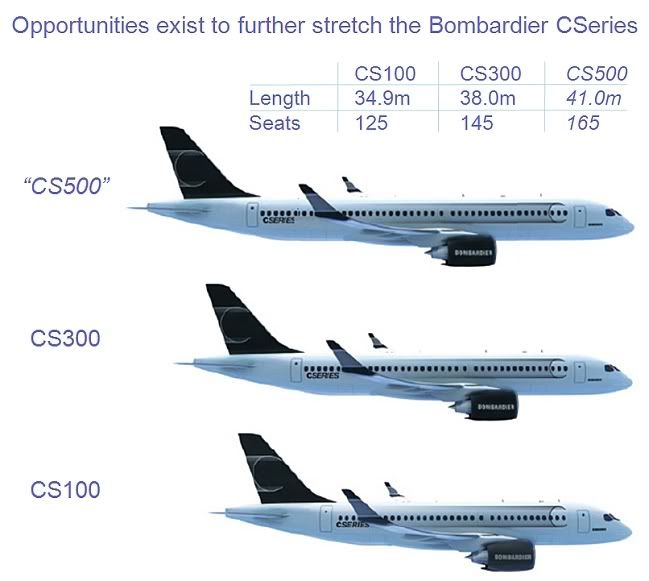
http://i191.photobucket.com/albums/z160 ... 1262819519
Image source: Keesje
The drawback was spreading costs over about a third as many seats as in a Boeing Co. 737. With oil averaging $77.93 this year through Sept. 2, up 39 percent from 2009, airlines favor regional jets that can carry 70 or more people and fly less often, or new turboprops.
This being said, to me it only makes sense for SN to keep a Q400NG baseline as RJ replacement until 2020. By then, the airline should have grown enough to support an operation like Tolipanebas is describing (but not with the CS100).More-comfortable turboprops such as Bombardier’s Q400 and airline labor contracts favoring bigger regional jets helped erode the one-time advantages of the smallest planes, he said.
My favorite plan:
2013-2020: 35 x Q400NG, 15 x A319LR, 5 x A320LR
(Q400NG to operate high frequencies between the big city pairs below 500km, operate very cheap to leisure destinations beyond 500km up to 1800km, new thin routes to underserved regions for European/African feed, A319/A320 to operate the big city pairs beyond 500km and sustainable routes beyond 1800km, including 13 existing and 2 new African routes up to around 5000km great circle range on an almost daily basis, as red-eyes).
The CS100 is to the CS300;
what the CR1/2 are to the CR7,
what the E135/145 are to the E170,
what the A318 is to the A320,
what the B747SP is to the the B747-400,
what the A340-200 is to the A340-300,
what the A340-500 is to the A340-600,
what the B767-200 is to the B767-300,
what the B737-600 is to the B737-800,
a less efficient smaller brother.
All these comparisons have on thing in common: the stretch versions have more seats for almost the same trip cost. A direct result of that is that the stretch versions have proven more popular (except in the RJ market where the CR7 and E170 were launched 10 years later than their smaller brothers and need time to catch up).
If SN were to ever consider ordering CS100, they'd be better off ordering the E195 or the CS300. For the same operating cost you get a proven design with the E195, for 8% more costs you carry 20% more seats in the CS300.
My bet is that Embraer will re-engine the E195 faster than BBD will deliver the first CS100, and a re-engined 195 will have over 10% lower operating cost than the CS100 with as many seats because of its lighter weight and smaller cabin cross-section.
The most efficient aircraft is an aircraft that has as long a fuselage as possible, with as small a cross-section as possible, as low a weight as possible and engines with as low an SFC as possible.
The CS100 is shorter than a CRJ900 and an E190 and barely longer than a CRJ700, it has a fat fuselage cross-section for the 5-abreast and it's heavy because it has the same wing as the CS300 and the industry believes that wing has been built to support a further stretch to 150 seats.
The only advantage the CS100 has is the lower projected engine SFC, but if you put the same or a similar engine on any similar aircraft, the CS100 is a short, fat, heavy, expensive and unproven lemon.
http://i191.photobucket.com/albums/z160 ... 1262819519
Image source: Keesje
-
brusselsairlinesfan
- Posts: 916
- Joined: 29 Mar 2007, 14:44
Re: Replacement of SN's Avro RJ and B737 fleet
Can someone just remind when the replacement will be announced please?