Moderator: Plane spotting team
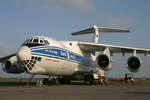
Prime advantages of the new IL-76TD-90VD
* Increased commercial payload to 50 tonnes
* New PS-90A-76 engines conform to ICAO noise and emissions requirements
* 15% less fuel burn than the previous version of the IL-76
* Maximum operating range increased to 10,200 km
* Up time increased to 500 hours
* Crew reduced to 4 persons
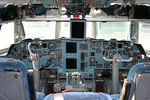
* New KUPOL-III-76M-VD digital integrated piloting/navigation system installed to ensure conformance with RNP-1 navigation accuracy requirements
* Airport/airfield possible elevation has been increased up to 3000m above sea level
 16-05-2006: IL-76TD-90VD to start commercial flights
hehe...tiznietzulle..!jan_olieslagers wrote:...... "Gzihistifbedanktwè!"
Moscow to Miscou.
South of Labrador the going got tough. Great clouds stacked up along the course with their bases almost on the water. Hardbitten Vladimir Kokkinaki, Brigadier-General of the Russian Air Force, Hero of the Soviet Union, went on instruments. Higher and higher he climbed his red two-motored bomber, of a type used by Russians fighting for Loyalist Spain. Dirty grey mist still dripped dismally off wing and windshield. Nineteen hours out of Moscow, with all the Atlantic behind him, he was tired. But New York City, his destination, was only five hours' flight ahead.
At 27,000 feet he and his navigator, husky, thin-haired Major Mikhail Gordienko, were using oxygen. Doggedly Hero Kokkinaki held his red ship, the Moskva, on its course. Near sundown, with no sight of sky or sea, his radio was frying with static like a pan of pork chops. Hopelessly lost, he turned Moskva back on its course. Finally with little more than two hours' fuel in the tanks, with oxygen running low, he fainted. Gordienko took over.
It was a long letdown. Moskva finally broke out over a small island. For 45 minutes, wide-mouthed Gordienko circled, looking for a good field. There was none. As night fell he took the best he could find. With wheels up, Moskva porpoised off a knoll, slammed down on her belly just beyond. Kokkinaki came to as the ship shuddered to a stop.
A French-Canadian villager told the tired and shaken Russians where they were by pointing to the spot on their map: Miscou Island, off the coast of New Brunswick, 700 miles short of New York, 3,900 miles from Moscow. Thus, last week after 23 hours and 36 minutes in the air, ended what had come close to being the longest east-west transatlantic flight. At Floyd Bennett Field, N. Y., where a crowd of 5,000 waited in a drizzling rain, a Russian Embassy attachè announced the news when it came in by telegraph. Twelve little girls with garlands of flowers for the transatlantic heroes laid them down and went home.
the ailerons are at the end of a large wing, so even though they are relatively small, they create a large moment .. also there are rollspoilers on top of the wing .. i'm pretty sure she flies just fine and without too much effortjan_olieslagers wrote:Must be really hard to control on finals, very slow so controls not very effective and than these smallish ailerons, response on the longitudinal axis must be sluggish at best! My heartfelt respects to those pilots!