A340 Weight Distribution Error ?
Moderator: Latest news team

A340 Weight Distribution Error ?
There are no strangers in the world, just friends we have yet to meet.

Interesting issue. Who is to blame? Is this an issue unique to the A340 series? Are other planes balanced differently (better) so that all the load is not on the front?
Does the front extend further than normal. Or is this part of the past weight issue?
And at 12 pax per ton, if the A380 is 6 tons over, that’s 72 pax less (and then the pesky are the beds to heavy for the CG, as everyone seems to be offering those up front.
Maybe its time to put the first class folks in the back of the plane! Well, they are always clogging up the loading, so put them back there, they can clog thins up they want while us less well off types can get seated.
Does the front extend further than normal. Or is this part of the past weight issue?
And at 12 pax per ton, if the A380 is 6 tons over, that’s 72 pax less (and then the pesky are the beds to heavy for the CG, as everyone seems to be offering those up front.
Maybe its time to put the first class folks in the back of the plane! Well, they are always clogging up the loading, so put them back there, they can clog thins up they want while us less well off types can get seated.
Frankly, IMO its nothing but sensation seeking journalism!
Airlines normally buy an empty airplane, and arrange for the manufacturer to fit out to their specification.
What this article may have accidentally uncovered is why the 345 and 346 are so drastically more expensive to operate than the equivalent 777's. The basic specific fuel consumption of the GE and RR engines are very similar, so the aerodynamics must be the reason.
In fact thinking a bit further, the nett SFC of the GE engine could be higher when you consider that all the auxiliary drives have to carry 100% of the systems load, where the RR auxiliary load may be about 33% of the total load after allowance for redundancy over four engines instead of two.
Being so long, they are obviously going to be CG sensitive, and maybe this is what the fuss is about, but cant see Airbus being liable for a customers choice of fittings and layout, and any resultant impact on performance.
Cheers
Achace
Airlines normally buy an empty airplane, and arrange for the manufacturer to fit out to their specification.
What this article may have accidentally uncovered is why the 345 and 346 are so drastically more expensive to operate than the equivalent 777's. The basic specific fuel consumption of the GE and RR engines are very similar, so the aerodynamics must be the reason.
In fact thinking a bit further, the nett SFC of the GE engine could be higher when you consider that all the auxiliary drives have to carry 100% of the systems load, where the RR auxiliary load may be about 33% of the total load after allowance for redundancy over four engines instead of two.
Being so long, they are obviously going to be CG sensitive, and maybe this is what the fuss is about, but cant see Airbus being liable for a customers choice of fittings and layout, and any resultant impact on performance.
Cheers
Achace


Based on that article, where is the actual error? Did Airbus specify a maximum weight for the front end of the plane (seats/entertainment/cargo/everything) or did they specify the maximum cargo the A346 can carry in its belly? If they specified a total frotn end weight and you still exceed it, why is it Airbus' fault?
And such a problem obviously can't be new, with Lufthansa operating such a large fleet, I don't think they only notice recently that their A346s are nosed down..
Also does this refer to the HGW or standard A346?
And such a problem obviously can't be new, with Lufthansa operating such a large fleet, I don't think they only notice recently that their A346s are nosed down..
Also does this refer to the HGW or standard A346?

I don't see the problem, except that the customers did not make their homework properly.
If it's a matter of weight, what's the diference between first-class sleeper beds, full config y-class seats, cgo in the lower hold,........
Every a/c has it's typical characteristic, ie some can not fly empty, some are nose heavy when full, tail heavy when empty,...
I cannot imagine an airline doesn't simulate all possible different scenario's before doing such large investments.
If it's a matter of weight, what's the diference between first-class sleeper beds, full config y-class seats, cgo in the lower hold,........
Every a/c has it's typical characteristic, ie some can not fly empty, some are nose heavy when full, tail heavy when empty,...
I cannot imagine an airline doesn't simulate all possible different scenario's before doing such large investments.
motorcycling : sensation with a twist of the wrist
-
tolipanebas

- Posts: 2442
- Joined: 12 May 2004, 00:00
interesting to note is that there are no airlines named who are complaining about this, hence the logic conclusion the journalist is just making a story out of some loose sniplets.
Besides, the A340-600 W&B envelope is defined for years already, so if any airline is to discover a problem with it's payload capabilities now, they are definitely the result of their own reconfiguration of the plane, on top of exceptionally late (as they should have discovered this BEFORE they'd reconfigure the plane)
Besides, the A340-600 W&B envelope is defined for years already, so if any airline is to discover a problem with it's payload capabilities now, they are definitely the result of their own reconfiguration of the plane, on top of exceptionally late (as they should have discovered this BEFORE they'd reconfigure the plane)

Yes but Airbus probably specified maximum loading at the front end of the plane, which is probably less than, for example, in the middle of the plane...PYX wrote:The space used by one of those seats is the equivalent of 6 tourist class seats. Do you think the combined weight of that one seat and a passenger is as much or more than that of the weight of 6 tourist class seats with passengers?
And are a346s reallyl flying nose down? That doesn't burn a bit more fuel, that will burn a HEAP more fuel, probably wont' even reach its destination right? you're talking about a total screw up of aerodynamics at cruise, a lower speed...
And then what would you put in that same space? One tourist seat? Two? Three? Leave it empty? At what point can the airlines still have revenue generating seats in that space and still carrry the amount of cargo they were told it could carry when they made the decision to buy the aircraft?CX wrote: Yes but Airbus probably specified maximum loading at the front end of the plane, which is probably less than, for example, in the middle of the plane...
-
smokejumper
- Posts: 1033
- Joined: 21 Oct 2005, 00:00
- Location: Northern Virginia USA
Perhaps I'm missing somthing here,but...
The manufacturer is ultimately responsible for delivering a plane that is within specification. The airlines specify the seats and other features they want and then the manufacturer ensures that they meet the specifications, within the designo the final delivered weight is within contract specifications.
If an airline sepcifies a lead floor to dampen vibration and noise, the manufacturer has to look into the weight and other issues to guarantee that it will fit within the airplane design specification. In other words, it SIA said they wanted a certain seat, Airbus should have worked with the seat manufacturer to be certain that the weights and other seat characteristics would fit within the design.
In my opinion, Airbus is totally liable for any penalties relating to this situation.
Also, it seems to me that Airbus is just repeating their previous mistake of blaming the customer for specifying elaborate entertainment systems and complex wiring for the A380 delays. I don't know who is behind this, but the Airbus PR department needs to be replaced with one that is competant!
The manufacturer is ultimately responsible for delivering a plane that is within specification. The airlines specify the seats and other features they want and then the manufacturer ensures that they meet the specifications, within the designo the final delivered weight is within contract specifications.
If an airline sepcifies a lead floor to dampen vibration and noise, the manufacturer has to look into the weight and other issues to guarantee that it will fit within the airplane design specification. In other words, it SIA said they wanted a certain seat, Airbus should have worked with the seat manufacturer to be certain that the weights and other seat characteristics would fit within the design.
In my opinion, Airbus is totally liable for any penalties relating to this situation.
Also, it seems to me that Airbus is just repeating their previous mistake of blaming the customer for specifying elaborate entertainment systems and complex wiring for the A380 delays. I don't know who is behind this, but the Airbus PR department needs to be replaced with one that is competant!
I think I was almost right.
A classic case of never letting facts ruin a good story.
Because the 345 and 346 are so long, the CG is an issue, and although there is lots of space, cargo has to be distributed strictly in line with the aircraft loading guidelines to avoid configuration anomolies.
I understand a similar issue affected the DC8 super 70.
No big deal, all aircraft have CG limits, its just that because it is so long it is distribution sensitive.
It is NOT payload limited, simply where you put it.
Cheers
Achace
.
A classic case of never letting facts ruin a good story.
Because the 345 and 346 are so long, the CG is an issue, and although there is lots of space, cargo has to be distributed strictly in line with the aircraft loading guidelines to avoid configuration anomolies.
I understand a similar issue affected the DC8 super 70.
No big deal, all aircraft have CG limits, its just that because it is so long it is distribution sensitive.
It is NOT payload limited, simply where you put it.
Cheers
Achace
.
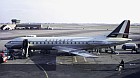
 Why does this not affect the many Boeing 777-300/ER's
  which are very long as well.
JAL,
Havent seen any Airbus comments on this.
The 346 is actually longer than the A380, so in relative terms the 777 is shorter and fatter, so not so susceptable to load distribution.
Remember all the 330 and earlier versions of the 340 are ok.
Back to basic mechanics, load multiplied by distance give you the moment(or torque) and anti-clockwise moments need to equal clockwise moments within the CG envelope.
Like I said before, "No big deal"
Cheers
Achace
Havent seen any Airbus comments on this.
The 346 is actually longer than the A380, so in relative terms the 777 is shorter and fatter, so not so susceptable to load distribution.
Remember all the 330 and earlier versions of the 340 are ok.
Back to basic mechanics, load multiplied by distance give you the moment(or torque) and anti-clockwise moments need to equal clockwise moments within the CG envelope.
Like I said before, "No big deal"
Cheers
Achace
Just another article from this boards resident Boeing cheerleader.
Funny how this stuff only comes to light years after the plane has been in service with a number of airlines that make profits using them isn;t it? Must be truly awful when airlines like Lufthansa ordered more of them.....years after they entered them into service.
Article has 'slow news day' written all over it.
Funny how this stuff only comes to light years after the plane has been in service with a number of airlines that make profits using them isn;t it? Must be truly awful when airlines like Lufthansa ordered more of them.....years after they entered them into service.
Article has 'slow news day' written all over it.

The 747-8 probably will have similar restrictions.
As an axample : the most aft position on the maindeck of a 747-400F can take up to max 2040kg. This space can accomodate a full size maindeck pllt (amd-contour) Normally, a pllt of such dimensions can take up to 6800kg (and this is the max certified weight of the net). I hear nobody complain about the loss of weight capacity.
As said previously, it's all a matter of physics
As an axample : the most aft position on the maindeck of a 747-400F can take up to max 2040kg. This space can accomodate a full size maindeck pllt (amd-contour) Normally, a pllt of such dimensions can take up to 6800kg (and this is the max certified weight of the net). I hear nobody complain about the loss of weight capacity.
As said previously, it's all a matter of physics
motorcycling : sensation with a twist of the wrist
