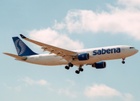
EADS' Airbus head Christian Streiff to resign?

Join this forum to discuss the latest news that happened in the world of commercial aviation.

Moderator: Latest news team

User avatar
PYX
Posts: 183
Joined: 23 Nov 2005, 00:00

Post by PYX »

David747 wrote:....likewise Boeing got loans for airliners like the 707/367-80 and737, and Military contracts that amount to government loans and aid, and further more,
Sorry, simply Not true!
The 707 was not a government funded project! Nor were the other commercial Boeing aircraft.
You are so blindly bias toward Airbus, at this point I don't think you would know the truth if it walked up and slapped you in the face.

(IMG:http://www.boeing.com/history/boeing/im ... sh80_n.jpg)
Some History on what we know as the Boeing 707, from:
http://www.boeing.com/commercial/707family/

"Model 367-80 -- The Dash 80

Seventy-two-year-old William Boeing came back to visit his former company for the May 14, 1954, rollout of the Model 367-80 at the Renton, Wash., plant. His wife, Bertha, christened the yellow and brown airplane with real champagne, and the Renton High School band played the Air Force theme. It was the prototype for the 707 passenger jet and the KC-135 jet tanker and would be the first member of the "700" family of commercial and military jets.

The Boeing Company had invested $16 million (two-thirds of the company's net profits from the post-war years) to build this prototype for a long-range jet aircraft. It was developed in secrecy and designated Model 367-80 to disguise it as merely an improved version of the C-97 Stratofreighter. It was subsequently nicknamed the "Dash 80," had jet engines and swept wings, and was very different from the straight-wing, propeller-powered Stratofreighter. When the Dash 80 was almost finished, the company gambled again -- by tooling and gearing up for a production aircraft, although neither the Air Force, nor any airline, had placed a single order.

Because the prototype was constructed to sell first as a military-tanker transport, it had few windows and no seats, but had two large cargo doors. A week after its first flight, the Air Force ordered 29 tanker versions, the KC-135. The commercial version, the 707, however, faced tough competition from the Douglas DC-8. Boeing salespeople directed their efforts to Pan American World Airways, Trans World Airlines and large European airlines. On Oct 14, Pan Am ordered 20 707s. At the same time, Pan Am ordered 25 DC-8s. The race was on.

In 1972, the Dash 80 became part of the Smithsonian's National Air and Space Museum collection. In August 2003, it flew to its new home on permanent display at the museum's new companion facility, the Steven F. Udvar-Hazy Center near Washington, D.C.'s Dulles International Airport.
Specifications..." See the above link.

More history can be found here:
http://www.boeing.com/commercial/707family/
"Production go-ahead for the Dash 80 was announced by Boeing Aug. 30, 1952, as a company-financed $16 million investment. The airplane rolled from the factory less than two years later, on May 14, 1954. Its first flight that July marked the 38th anniversary of The Boeing Company."

User avatar
David747
Posts: 777
Joined: 11 May 2006, 00:00
Location: Teterboro KTEB, USA

Post by David747 »

PYX wrote:
David747 wrote:....likewise Boeing got loans for airliners like the 707/367-80 and737, and Military contracts that amount to government loans and aid, and further more,
Sorry, simply Not true!
The 707 was not a government funded project! Nor were the other commercial Boeing aircraft.
You are so blindly bias toward Airbus, at this point I don't think you would know the truth if it walked up and slapped you in the face.

(IMG:http://www.boeing.com/history/boeing/im ... sh80_n.jpg)
Some History on what we know as the Boeing 707, from:
http://www.boeing.com/commercial/707family/

"Model 367-80 -- The Dash 80

Seventy-two-year-old William Boeing came back to visit his former company for the May 14, 1954, rollout of the Model 367-80 at the Renton, Wash., plant. His wife, Bertha, christened the yellow and brown airplane with real champagne, and the Renton High School band played the Air Force theme. It was the prototype for the 707 passenger jet and the KC-135 jet tanker and would be the first member of the "700" family of commercial and military jets.

The Boeing Company had invested $16 million (two-thirds of the company's net profits from the post-war years) to build this prototype for a long-range jet aircraft. It was developed in secrecy and designated Model 367-80 to disguise it as merely an improved version of the C-97 Stratofreighter. It was subsequently nicknamed the "Dash 80," had jet engines and swept wings, and was very different from the straight-wing, propeller-powered Stratofreighter. When the Dash 80 was almost finished, the company gambled again -- by tooling and gearing up for a production aircraft, although neither the Air Force, nor any airline, had placed a single order.

Because the prototype was constructed to sell first as a military-tanker transport, it had few windows and no seats, but had two large cargo doors. A week after its first flight, the Air Force ordered 29 tanker versions, the KC-135. The commercial version, the 707, however, faced tough competition from the Douglas DC-8. Boeing salespeople directed their efforts to Pan American World Airways, Trans World Airlines and large European airlines. On Oct 14, Pan Am ordered 20 707s. At the same time, Pan Am ordered 25 DC-8s. The race was on.

In 1972, the Dash 80 became part of the Smithsonian's National Air and Space Museum collection. In August 2003, it flew to its new home on permanent display at the museum's new companion facility, the Steven F. Udvar-Hazy Center near Washington, D.C.'s Dulles International Airport.
Specifications..." See the above link.

More history can be found here:
http://www.boeing.com/commercial/707family/
"Production go-ahead for the Dash 80 was announced by Boeing Aug. 30, 1952, as a company-financed $16 million investment. The airplane rolled from the factory less than two years later, on May 14, 1954. Its first flight that July marked the 38th anniversary of The Boeing Company."
Here is a quick from the Book Boeing Jetliner Databook:
In studying prospects for the replacement of the KC-97, Boeing developed the 367-80 program as a civilian and military airframe after receiving a sizeble order of 29 planes that became the KC135in 1954. Source of this is Boeing Jetliner Databook, right at the beginning, page 35. So in other words, without the government research and development money for the KC-135, the B707 would have never existed as a commercial airframe. Now, to address what you say is a bias towards Airbus, I don't have a bias towards Airbus, see, the difference between you and I and RC20 is that I don't play the laughable nationalistic card that comes with these two companies, I cut through the BS and report the facts as they are, maybe you should try to do the same, and do me a favor, if you want to know about Boeing, don't go to their site to get a real biased history, but buy independent books, from motorbooks, and learn the indepth story of the programs. :D

User avatar
CX
Posts: 788
Joined: 30 Jul 2005, 00:00

Post by CX »

smokejumper wrote:There seems to be an assumption that the A380 is just suffering from incompetent managment and once the problems are sorted out, all will be OK and orders will come streaming in. I do not agree.

There is a market for large planes like the A380, but it is limited. The plane's only profitable routes will be on densely packed routes (e.g., New York - Paris, Middle East capitals and London. Singapore and Tokyo, etc.) that have large numbers of passengers traveling for long distances at the same time. Most city pairs do not justify planes as large as the A380, therefore the market is limited. I do not know what the ultimate market size for the A380 is, but I'm sure it is not more than 250 planes. The 2 year delay has certainly not helped.

Boeing has positioned the 747-8i (450 seats) to be between the 777-300 (350 seats) and the A380 (550 seats). With a similar range (8,000 miles vs. 8,300 for the A380). The market for the 747-8i is also limited, but probably a bit larger than for the A380 (the 747-8i may be a bit more versitile due to it's smaller size and better fuel efficiancy).

I predict that Airbus will never recover the total costs (development + production + penalty costs); Boeing has lower development costs for the 747-8i and can reach break-even at a lower production run.
Haven't you been reading news that Boeing will turn the 748I into a 500 seater? Airlines actually pushed Boeing to turn the 748I into one that is 'an alternative' to the A380.
I also dont' know why the 748I has better fuel efficiency. Lower fuel consumption - yes, like a Honda Civil will surely consume less fuel than a bus.

User avatar
PYX
Posts: 183
Joined: 23 Nov 2005, 00:00

Post by PYX »

David747 wrote:
> Here is a quick from the Book Boeing Jetliner Databook:
> In studying prospects for the replacement of the KC-97, Boeing developed
> the 367-80 program as a civilian and military airframe after receiving a
> sizeble order of 29 planes that became the KC135 in 1954.
> Source of this is Boeing Jetliner Databook, right at the beginning, page 35.

I'll stick with Boeing version of the facts, as I would assume they would know better than anyone else their own history.
I don't see it as one country vs another, but one set of business practices vs another. if the situation was reversed I would side with Airbus.
There is no way on this earth that you can convince me that a company structured and financed as is Airbus is "playing on a level field." If Airbus had to operate as a truly independent company, i.e., they have to make a profit to stay in business, it would have either changed it method of doing business or folded years ago.
While I agree competition is definitely needed, given the way Airbus operates I would prefer to see them go bankrupt, which they surely would if the European taxpayers weren't being bled to keep Airbus afloat. Another company (or companies) will come along to fill the void.

User avatar
David747
Posts: 777
Joined: 11 May 2006, 00:00
Location: Teterboro KTEB, USA

Post by David747 »

PYX wrote:David747 wrote:
> Here is a quick from the Book Boeing Jetliner Databook:
> In studying prospects for the replacement of the KC-97, Boeing developed
> the 367-80 program as a civilian and military airframe after receiving a
> sizeble order of 29 planes that became the KC135 in 1954.
> Source of this is Boeing Jetliner Databook, right at the beginning, page 35.
I'll stick with Boeing version of the facts, as I would assume they would know better than anyone else their own history.
Of course you'll stick with the Boeing version of the facts its convinient for you, no research involved, but if you really want to know more about the program read an independent source and you'll see more of the picture.
I don't see it as one country vs another, but one set of business practices vs another. if the situation was reversed I would side with Airbus.
There is no way on this earth that you can convince me that a company structured and financed as is Airbus is "playing on a level field." If Airbus had to operate as a truly independent company, i.e., they have to make a profit to stay in business, it would have either changed it method of doing business or folded years ago. While I agree competition is definitely needed, given the way Airbus operates I would prefer to see them go bankrupt, which they surely would if the European taxpayers weren't being bled to keep Airbus afloat. Another company (or companies) will come along to fill the void
See, like RC20 you avoid facts, the fact of the matter is Airbus and Boeing both get state aid, and for you to say that only Airbus is guilty would be to dismiss facts like Washington state giving Boeing tax incentives to build the 787 Washington state.

http://seattlepi.nwsource.com/business/ ... idy28.html

http://www.yeald.com/Yeald/a/34031/boei ... wings.html

User avatar
PYX
Posts: 183
Joined: 23 Nov 2005, 00:00

Post by PYX »

The "fact" is there is a difference between giving a company tax breaks to build a factory or office complex in a city and thereby improve the economy of that area via the salaries paid, the increased tax base as a result, etc., etc., etc. AND asking for and being given direct government funding to build an aircraft, which without you could not build it at all. Airbust, wouldn't be in existence without such direct government funding.
If you can't quite grasp that, don't take any business courses.
Airbust has plans to build a plant in the southeastern U.S. where they will be given tax breaks by the local area governments plus CASH of almost 100 Million Dollars, on top of whatever else they gouge out of the European taxpayers.

User avatar
David747
Posts: 777
Joined: 11 May 2006, 00:00
Location: Teterboro KTEB, USA

Post by David747 »

PYX wrote:The "fact" is there is a difference between giving a company tax breaks to build a factory or office complex in a city and thereby improve the economy of that area via the salaries paid, the increased tax base as a result, etc., etc., etc. AND asking for and being given direct government funding to build an aircraft, which without you could not build it at all. Airbust, wouldn't be in existence without such direct government funding.
If you can't quite grasp that, don't take any business courses.
Airbust has plans to build a plant in the southeastern U.S. where they will be given tax breaks by the local area governments plus CASH of almost 100 Million Dollars, on top of whatever else they gouge out of the European taxpayers.
A subsidy is a subsidy is a subsidy, and as I have shown, both companies, Airbus and Boeing get them. End of story. :thumbsup2:

User avatar
Airbus330lover
Posts: 889
Joined: 21 Jul 2005, 00:00
Location: Rixensart

Post by Airbus330lover »

A subsidy is a subsidy is a subsidy, and as I have shown, both companies, Airbus and Boeing get them. End of story. :thumbsup2:[/quote]
End of story. Let's hope it's true.
No A / B forum please

User avatar
CX
Posts: 788
Joined: 30 Jul 2005, 00:00

Post by CX »

Airbus330lover wrote:A subsidy is a subsidy is a subsidy, and as I have shown, both companies, Airbus and Boeing get them. End of story. :thumbsup2:
End of story. Let's hope it's true.
No A / B forum please[/quote]

yes, they both get them.
wasn't it said by boeing during the wto dispute that if airbus gets it, we'll get it as well?

User avatar
PYX
Posts: 183
Joined: 23 Nov 2005, 00:00

Post by PYX »

David747 wrote:
PYX wrote:The
A subsidy is a subsidy is a subsidy, and as I have shown, both companies, Airbus and Boeing get them. End of story.
You shown nothing but your lack of ability to understand the difference between business practices and government handouts and the resulting damage a government funded and controlled company like Airbus has done to the aviation business, i.e., killing off their competitors with predatory pricing that only a government subsidized company can do because it doesn't have to make a profit.

User avatar
Ruscoe
Posts: 183
Joined: 15 Nov 2004, 00:00
Location: Brisbane

Post by Ruscoe »

A subsidy is a subsidy is a subsidy, and as I have shown, both companies, Airbus and Boeing get them. End of story. :thumbsup2:[/quote]

There is a difference between launch aid and the type of mostly tax breaks Boeing gets.
Launch aid distorts the marketplace, and tax breaks don't. (not nearly as much)

With tax breaks the company has to make a decision based on the viability of the product, design and build it and only gets an advantage when a profit is made.
With launch aid the availability of what is overall "cheap money", which is so structured as to limit liability, allows a Corporation to make business decisions which otherwise are not viable or don't make a lot of sense in the real world.

Just in case you are wondering, Airbus recieve aid from local Govt just the same as Boeing in addition to launch aid at a Federal or National level.

Ruscoe

User avatar
David747
Posts: 777
Joined: 11 May 2006, 00:00
Location: Teterboro KTEB, USA

Post by David747 »

PYX wrote:
David747 wrote:
sorry, I understand pretty well what is going on, I just don't drink the Boeing kool aid like you do. end of story :D

airazurxtror
Posts: 3769
Joined: 17 Nov 2005, 00:00

Post by airazurxtror »

Resignation of Streiff is soon to be acknowledged. Louis Gallois, present EADS co-president is thought to be his successor.
http://fr.biz.yahoo.com/09102006/202/ea ... reiff.html

User avatar
TexasGuy
Posts: 669
Joined: 15 Apr 2006, 00:00
Location: Houston, Texas

Post by TexasGuy »

It is official.


PARIS - Airbus parent company EADS on Monday announced the resignation of the European plane maker's chief executive, Christian Streiff, and named one of its own co-CEOs to replace him.


European Aeronautic Defence and Space Co. said in a statement that Streiff will be replaced by Louis Gallois, who will combine the top job at Airbus with his current role as joint head of the Franco-German defense group.

As part of the reshuffle, EADS' German co-CEO Tom Enders will no longer have direct managerial responsibility for Airbus, the statement said.

Streiff's departure deals a fresh blow to Airbus as it struggles to limit the damage from a costly two-year delay to the flagship A380 superjumbo jet..................


http://news.yahoo.com/s/ap/20061009/ap_ ... nce_airbus
Theres nothing better than slow cooked fall off the bone BBQ, Texas style

User avatar
PYX
Posts: 183
Joined: 23 Nov 2005, 00:00

Post by PYX »

Story here: http://iagblog.blogspot.com/

".......The appearance at EADS and Airbus is that they are out of touch with reality. And reality is not something that is welcome. No wonder employees are worried. We wonder how much EADS is paying Streiff to be quiet?"

smokejumper
Posts: 1033
Joined: 21 Oct 2005, 00:00
Location: Northern Virginia USA

Post by smokejumper »

CX wrote:
smokejumper wrote:There seems to be an assumption that the A380 is just suffering from incompetent managment and once the problems are sorted out, all will be OK and orders will come streaming in. I do not agree.

There is a market for large planes like the A380, but it is limited. The plane's only profitable routes will be on densely packed routes (e.g., New York - Paris, Middle East capitals and London. Singapore and Tokyo, etc.) that have large numbers of passengers traveling for long distances at the same time. Most city pairs do not justify planes as large as the A380, therefore the market is limited. I do not know what the ultimate market size for the A380 is, but I'm sure it is not more than 250 planes. The 2 year delay has certainly not helped.

Boeing has positioned the 747-8i (450 seats) to be between the 777-300 (350 seats) and the A380 (550 seats). With a similar range (8,000 miles vs. 8,300 for the A380). The market for the 747-8i is also limited, but probably a bit larger than for the A380 (the 747-8i may be a bit more versitile due to it's smaller size and better fuel efficiancy).

I predict that Airbus will never recover the total costs (development + production + penalty costs); Boeing has lower development costs for the 747-8i and can reach break-even at a lower production run.
Haven't you been reading news that Boeing will turn the 748I into a 500 seater? Airlines actually pushed Boeing to turn the 748I into one that is 'an alternative' to the A380.
I also dont' know why the 748I has better fuel efficiency. Lower fuel consumption - yes, like a Honda Civil will surely consume less fuel than a bus.

With several "blue chip" airlines orderig the A380, it demonstrates that there is a viable requirement for the plane, but that market is limited. The A380 is focused on a hub-to-hub operation that needs large numbers of passengers flying between two cities several times a day. There are only so many of these sites; certainly, Vancouver BC to Brussels does not qualify as a A380 route.

The B747-8 was originally set for 435 passengers and a 8300 mile range. By expandng it to 450 passengers, Boeing has said that the range is reduced to 8000 miles (some airlines say the 300 miles is significant for their routes). This is due to the extra structural weight required to stretch the plane for the greater number of people. For this reason, Boeing originally proposed making the 747-8i shorter than the 747-8 Freighter! If they offer the plane for 500 passengers, they'll have to stretch it more (or offer fewer premium-class seats), adding weight for the extra length and thereby reduce the range to something much less than 8000 miles.

Now, Boeing can get additional range by designing a totaly new wing for more fuel or by taking underfloor space to hold additional tanks - but then they'd exceed the maximum gross weight and have to redesign the landing gear and brakes, etc. It never ends.

Boeing's approach is to improve a proven workhorse at minimum cost, not spend tons and tons of money on a very limited market.

As for fuel consumption, the 747-8i will use less fuel than for the A380 due to lesser weight (if for no other reason like less drag form a smaller fuselage and wing). If you calculate the structural and maximum gross weights per passenger for both aircraft, you'll see that the 747-8 weighs less, and will therefore use less fuel. Less weight equals better fuel mileage, just like in autos.

User avatar
David747
Posts: 777
Joined: 11 May 2006, 00:00
Location: Teterboro KTEB, USA

Post by David747 »

smokejumper wrote:
CX wrote:
smokejumper wrote:There seems to be an assumption that the A380 is just suffering from incompetent managment and once the problems are sorted out, all will be OK and orders will come streaming in. I do not agree.

I predict that Airbus will never recover the total costs (development + production + penalty costs); Boeing has lower development costs for the 747-8i and can reach break-even at a lower production run.
Haven't you been reading news that Boeing will turn the 748I into a 500 seater? Airlines actually pushed Boeing to turn the 748I into one that is 'an alternative' to the A380.
I also dont' know why the 748I has better fuel efficiency. Lower fuel consumption - yes, like a Honda Civil will surely consume less fuel than a bus.
With several "blue chip" airlines orderig the A380, it demonstrates that there is a viable requirement for the plane, but that market is limited. The A380 is focused on a hub-to-hub operation that needs large numbers of passengers flying between two cities several times a day. There are only so many of these sites; certainly, Vancouver BC to Brussels does not qualify as a A380 route.
Agreed.
The B747-8 was originally set for 435 passengers and a 8300 mile range. By expandng it to 450 passengers, Boeing has said that the range is reduced to 8000 miles (some airlines say the 300 miles is significant for their routes). This is due to the extra structural weight required to stretch the plane for the greater number of people. For this reason, Boeing originally proposed making the 747-8i shorter than the 747-8 Freighter! If they offer the plane for 500 passengers, they'll have to stretch it more (or offer fewer premium-class seats), adding weight for the extra length and thereby reduce the range to something much less than 8000 miles.
Wouldn't Boeing also benefit by increasing the 748I's cross section by a couple of feet? It would make the 748I a little wider and easier to fit more sits. Still, I don't see the 748I selling well, but I am hoping that Lufthansa does place an order for the 748 to see that bird get one last successful run. :D
Now, Boeing can get additional range by designing a totaly new wing for more fuel or by taking underfloor space to hold additional tanks - but then they'd exceed the maximum gross weight and have to redesign the landing gear and brakes, etc. It never ends.
Good point. I guess that answers my question above.
Boeing's approach is to improve a proven workhorse at minimum cost, not spend tons and tons of money on a very limited market.
Agreed, and the fact that the 748F is selling well compared to its nearest competition the A380F proves your point.

sn-remember
Posts: 848
Joined: 13 Sep 2004, 00:00
Location: Jodoigne/Geldenaken
Contact:

Post by sn-remember »

teach wrote:Could you please refrain from posting such incredibly misleading thread titles? There is NOTHING official about him stepping down. There is a RUMOR, and even in the article you linked to, this rumor is DENIED by Airbus.

Don't try to pass off rumors as fact!
I don't understand that such misleading title has not been updated asap by some luchtzak administartor..
This is not good for the quality of this forum.

Please could you some reponsible guy at Luchtzak do that urgently since M. Streiff is still occupying his position.
Thx

User avatar
luchtzak
Posts: 11841
Joined: 18 Sep 2002, 00:00
Location: Hofstade, Zemst - Belgium
Contact:

Post by luchtzak »

Read on many news websites that Streiff has been fired by Airbus and that Louis Gallois is the new CEO of Airbus, perhaps the title was misleading at first but now :?: :?

User avatar
CX
Posts: 788
Joined: 30 Jul 2005, 00:00

Post by CX »

Can't believe the guy is fired...
However somehow this gives a hope that the A380 problems, with better methods by someone else, can turn into a smaller problem that can shorten the period of delay. However i doubt it.

Post Reply