BTW these are the famous
Key differences with the NASA Space Shuttle
· Buran was designed to be capable of both manned and unmanned flight, it had automated landing capability; the manned version has never been operational
· The orbiter had no main rocket engines, freeing space and weight for additional payload; the largest cylindrical structure is the Energiya carrier-rocket, not just a fuel tank.
· There were four boosters instead of two, and they used liquid propellant (kerosene/oxygen)
· The Energiya carrier, including the main engines, was designed to be reusable but funding cuts meant that a reusable version of Energiya was never completed. The U.S. Space Shuttle has reuseable main engines in the orbiter and reusable Solid Rocket Boosters.
· Buran could lift 30 tonnes to orbit, against the Space Shuttle's 25 tonnes.
· The high lift-drag ratio of the space aeroplane Buran is 6.5 against 5.5 for Space Shuttle
· Buran returned 20 tonnes of payload against 15 tonnes for Space Shuttle orbiter from an orbit to an aerodrome
· The cutting lay-out pattern of thermoprotection tiles of Buran is optimal and longitudinal slits of tile belts are orthogonal to the flow line. Sharp angles of tiles are absent.
The official aviation quiz topic!
Moderator: Latest news team

-
HorsePower
- Posts: 1589
- Joined: 12 Jan 2005, 00:00
- Location: France
Thanks for the complete answer, Rago. I think everybody here learnt something today  !
!
RealPlanesHaveProp don't worry, I'm sure it will be your turn sooner than later...!
OK, I would like to continue on the space subject:
As you know, only the USA and Russia can supply the International Space Station (ISS). But in few months, european countries are going to help with their own vehicule: the Automated Transfer Vehicle (ATV).
My (easy) question is:
>How is christened the first ATV?
>Also it would be perfect if you can give the ATV total mass at launch and the Max cargo upload capacity...
Regards
Seb.
!RealPlanesHaveProp don't worry, I'm sure it will be your turn sooner than later...!
OK, I would like to continue on the space subject:
As you know, only the USA and Russia can supply the International Space Station (ISS). But in few months, european countries are going to help with their own vehicule: the Automated Transfer Vehicle (ATV).
My (easy) question is:
>How is christened the first ATV?
>Also it would be perfect if you can give the ATV total mass at launch and the Max cargo upload capacity...
Regards
Seb.
-
Advisor

- Posts: 3616
- Joined: 09 Sep 2004, 03:00
- Location: Heart Lies In Rwy 09/27 'D' 'B-3' TaxiTrack
- Contact:
Awesome specs manRago wrote:BTW these are the famous
Key differences with the NASA Space Shuttle
· Buran was designed to be capable of both manned and unmanned flight, it had automated landing capability; the manned version has never been operational
· The orbiter had no main rocket engines, freeing space and weight for additional payload; the largest cylindrical structure is the Energiya carrier-rocket, not just a fuel tank.
· There were four boosters instead of two, and they used liquid propellant (kerosene/oxygen)
· The Energiya carrier, including the main engines, was designed to be reusable but funding cuts meant that a reusable version of Energiya was never completed. The U.S. Space Shuttle has reuseable main engines in the orbiter and reusable Solid Rocket Boosters.
· Buran could lift 30 tonnes to orbit, against the Space Shuttle's 25 tonnes.
· The high lift-drag ratio of the space aeroplane Buran is 6.5 against 5.5 for Space Shuttle
· Buran returned 20 tonnes of payload against 15 tonnes for Space Shuttle orbiter from an orbit to an aerodrome
· The cutting lay-out pattern of thermoprotection tiles of Buran is optimal and longitudinal slits of tile belts are orthogonal to the flow line. Sharp angles of tiles are absent.
Sorry Seb could not resist complimenting our Police man 
Aum Sweet Aum.
-
realplaneshaveprops
- Posts: 698
- Joined: 21 Apr 2005, 00:00
Jules Verne, the first Automated Transfer Vehicle (ATV), will be launched next year by a specific version of Ariane 5 called the Ariane 5 Evolution Storable upper stage Automated Transfer Vehicle, or A5 ES-ATV for short.
Payload envelope 2 x 0.314 m3 and 2 x 0.414 m3 for each of 8 racks
Cargo mass Dry cargo: 1500-5500 kg
Water: 0-840 kg
Gas (Nitrogen, Oxygen, air, 2 gasses/flight): 0-100 kg
ISS re-boost and attitude control propellant: 0-4700 kg
Total cargo upload capacity: 7667 kg
Flight hardware
Spacecraft dry mass: 5320 kg
Cargo carrier dry mass: 5150 kg
Total mass dry mass: 10470 kg
Air/Consumables: 2613 kg
Cargo upload capacity: 7667 kg
Mass at launch: 20750 kg
Waste download capacity: 6340 kg
(5500 kg dry + 840 wet)
Koen
Payload envelope 2 x 0.314 m3 and 2 x 0.414 m3 for each of 8 racks
Cargo mass Dry cargo: 1500-5500 kg
Water: 0-840 kg
Gas (Nitrogen, Oxygen, air, 2 gasses/flight): 0-100 kg
ISS re-boost and attitude control propellant: 0-4700 kg
Total cargo upload capacity: 7667 kg
Flight hardware
Spacecraft dry mass: 5320 kg
Cargo carrier dry mass: 5150 kg
Total mass dry mass: 10470 kg
Air/Consumables: 2613 kg
Cargo upload capacity: 7667 kg
Mass at launch: 20750 kg
Waste download capacity: 6340 kg
(5500 kg dry + 840 wet)
Koen
-
HorsePower
- Posts: 1589
- Joined: 12 Jan 2005, 00:00
- Location: France
-
realplaneshaveprops
- Posts: 698
- Joined: 21 Apr 2005, 00:00

-
realplaneshaveprops
- Posts: 698
- Joined: 21 Apr 2005, 00:00


 Andries
 -
realplaneshaveprops
- Posts: 698
- Joined: 21 Apr 2005, 00:00
-
realplaneshaveprops
- Posts: 698
- Joined: 21 Apr 2005, 00:00
Because I haven't seen the correct answer in this topic, I will give the link!
The answer can be found on this website:
http://www.sr-71.org/blackbird/sr-71
Koen
The answer can be found on this website:
http://www.sr-71.org/blackbird/sr-71
Koen
-
realplaneshaveprops
- Posts: 698
- Joined: 21 Apr 2005, 00:00
Is there anyone trying to find the answer of my question?
I will give the answer on monday if not found.
My question: What color is the SR-71?
(name + colornumber)
The answer can be found on
http://www.sr-71.org/blackbird/index.htm
Koen
I will give the answer on monday if not found.
My question: What color is the SR-71?
(name + colornumber)
The answer can be found on
http://www.sr-71.org/blackbird/index.htm
Koen
-
HorsePower
- Posts: 1589
- Joined: 12 Jan 2005, 00:00
- Location: France
-
realplaneshaveprops
- Posts: 698
- Joined: 21 Apr 2005, 00:00
Correct Horsepower, the SR-71 is painted FS35402 Indigo Blue, even though it looks black.
Question 22 of the SR-71 Trivia http://www.sr-71.org/blackbird/trivia/q ... _21-30.htm
I will start looking for another question
Koen
Question 22 of the SR-71 Trivia http://www.sr-71.org/blackbird/trivia/q ... _21-30.htm
I will start looking for another question
Koen
-
realplaneshaveprops
- Posts: 698
- Joined: 21 Apr 2005, 00:00
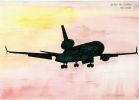
1°) 25 october 1991
2°)Toulouse Blagnac
3°)The wings were fluttering
4°) Airbus used 4 the same engine pylons but when the airspeed increased the wings bend upwards and made the wings fluttering
2°)Toulouse Blagnac
3°)The wings were fluttering
4°) Airbus used 4 the same engine pylons but when the airspeed increased the wings bend upwards and made the wings fluttering
When once you have tasted flight, you will forever walk the earth with your eyes turned skyward, for there you have been, and there you will always long to return."
-
realplaneshaveprops
- Posts: 698
- Joined: 21 Apr 2005, 00:00