
Nobody? First hint: more than 30,000 for the first time.sn26567 wrote:How many flights were that?
The official aviation quiz topic!
Moderator: Latest news team


-
Comet
- Posts: 6484
- Joined: 05 Jul 2003, 00:00
- Location: Scarborough, North Yorkshire, England
- Contact:
After Andre's last clue, I checked up on Eurocontrol's official website. I had been searching the news reports originally but couldn't find it there 
OK, here's one from the annals of British aviation...
It's in three parts...
Name:
(a) The type and registration of the first British aircraft to exceed the speed of sound.
(b) The pilot of the aircraft.
(c) The date of the flight.
Enjoy...
OK, here's one from the annals of British aviation...
It's in three parts...
Name:
(a) The type and registration of the first British aircraft to exceed the speed of sound.
(b) The pilot of the aircraft.
(c) The date of the flight.
Enjoy...
Sabena and Sobelair - gone but never forgotten.
Louise
Louise
-
realplaneshaveprops
- Posts: 698
- Joined: 21 Apr 2005, 00:00
-
Comet
- Posts: 6484
- Joined: 05 Jul 2003, 00:00
- Location: Scarborough, North Yorkshire, England
- Contact:
The answer is right in parts.realplaneshaveprops wrote:First British jet to break sound barrier on Sept. 9, 1948 was the deHavilland DH-108 Swallow. Pilot: John Derry
Koen
The pilot is correct, the aircraft type is correct. The date is wrong and I also want the registration of the aircraft.
Sabena and Sobelair - gone but never forgotten.
Louise
Louise
-
realplaneshaveprops
- Posts: 698
- Joined: 21 Apr 2005, 00:00
On April 12, 1948, the aircraft set a new 100 km (62.1 mile) closed circuit speed record of 605.23 mph (974 km/h), flown by John Derry, and it was certain that it could better the top speed of the preceding low speed airframes.
On September 6, 1948, again flown by John Derry, the aircraft reached Mach 1.0 in a dive between 40,000 and 30,000 ft. (12192 m to 9144 m) without any buffeting or instability, only some tightening of controls. It became the first British aircraft to break the sound barrier and the first turbo-jet aircraft in history to exceed the sound barrier
Registration: VW120
(Most websites say 9 september 1948)
Koen
On September 6, 1948, again flown by John Derry, the aircraft reached Mach 1.0 in a dive between 40,000 and 30,000 ft. (12192 m to 9144 m) without any buffeting or instability, only some tightening of controls. It became the first British aircraft to break the sound barrier and the first turbo-jet aircraft in history to exceed the sound barrier
Registration: VW120
(Most websites say 9 september 1948)
Koen
-
Comet
- Posts: 6484
- Joined: 05 Jul 2003, 00:00
- Location: Scarborough, North Yorkshire, England
- Contact:
Correct I have a book about John Derry, he is one of my aviation "idols" and the book shows a page from his logbook detailing the supersonic flight and showing the date as 6th September 1948, so that is the correct answer, not those which say the flight was 9th September.
Your turn...
I have a book about John Derry, he is one of my aviation "idols" and the book shows a page from his logbook detailing the supersonic flight and showing the date as 6th September 1948, so that is the correct answer, not those which say the flight was 9th September.Your turn...
Sabena and Sobelair - gone but never forgotten.
Louise
Louise
-
realplaneshaveprops
- Posts: 698
- Joined: 21 Apr 2005, 00:00
-
realplaneshaveprops
- Posts: 698
- Joined: 21 Apr 2005, 00:00
Next question comes from you, Rago!
For more info about the V2 Rocket:
http://www.v2rocket.com/start/start.html
Koen
For more info about the V2 Rocket:
http://www.v2rocket.com/start/start.html
Koen
Ok, here we go; A relatively easy one (in some steps)
1. Which Russian designer influenced with his ideas almost every WIG project?
2. In which era did he start his work?
3. What was his branch of transport means?
4. What is the name off the development plant?
5. What's the most popular military member of the WIG Family? (hint: 550 tons)
6. Who gave his personal support to realise this project?
Good luck!
1. Which Russian designer influenced with his ideas almost every WIG project?
2. In which era did he start his work?
3. What was his branch of transport means?
4. What is the name off the development plant?
5. What's the most popular military member of the WIG Family? (hint: 550 tons)
6. Who gave his personal support to realise this project?
Good luck!
-
realplaneshaveprops
- Posts: 698
- Joined: 21 Apr 2005, 00:00
1. Lippisch
2. 1921
3. New type designed to move across a surface (water, snow, ice, ground)
4. CHDB (Central Hydrofoil Design Bureau)
5. Caspian Sea Monster
6. Rostislav Evgenievich Alexeev
Picture of an Ekranoplan: the Orlyonok
http://jpcolliat.free.fr/ekra/images/al ... nok_01.jpg
Koen
2. 1921
3. New type designed to move across a surface (water, snow, ice, ground)
4. CHDB (Central Hydrofoil Design Bureau)
5. Caspian Sea Monster
6. Rostislav Evgenievich Alexeev
Picture of an Ekranoplan: the Orlyonok
http://jpcolliat.free.fr/ekra/images/al ... nok_01.jpg
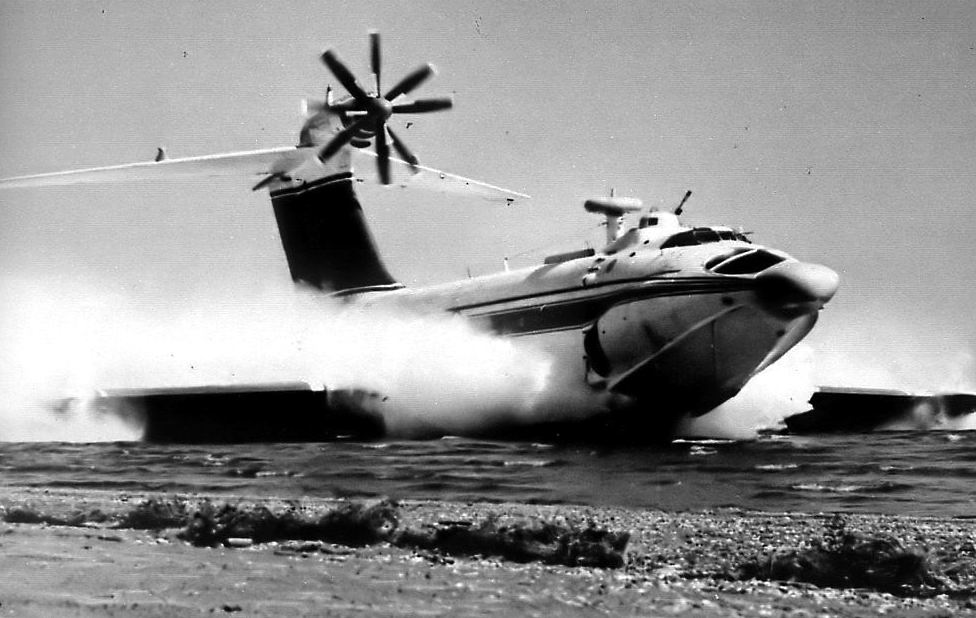
Koen
Good try:realplaneshaveprops wrote:1. Lippisch
2. 1921
3. New type designed to move across a surface (water, snow, ice, ground)
4. CHDB (Central Hydrofoil Design Bureau)
5. Caspian Sea Monster
6. Rostislav Evgenievich Alexeev
Koen
1. nope! Lippisch isn't Russian

2. not the "big" era
3. maybe refrase my question: what was the speciality of the designer?

4. CORRECT! :thumbsup2:
5. CORRECT! :thumbsup2:
6. nope!
-
realplaneshaveprops
- Posts: 698
- Joined: 21 Apr 2005, 00:00
Another try!
1. Rostislav Evgenievich Alexeev
2. Cold War
3. Rostislav Alekseev had been designing and building various hydrofoil boats for 14 years and had almost finished his famous first riverine hydrofoil passenger ship “Raketa
4. CHDB (Central Hydrofoil Design Bureau)
5. Caspian Sea Monster
6. No idea
1. Rostislav Evgenievich Alexeev
2. Cold War
3. Rostislav Alekseev had been designing and building various hydrofoil boats for 14 years and had almost finished his famous first riverine hydrofoil passenger ship “Raketa
4. CHDB (Central Hydrofoil Design Bureau)
5. Caspian Sea Monster
6. No idea
Better!realplaneshaveprops wrote:Another try!
1. Rostislav Evgenievich Alexeev
2. Cold War
3. Rostislav Alekseev had been designing and building various hydrofoil boats for 14 years and had almost finished his famous first riverine hydrofoil passenger ship “Raketa
4. CHDB (Central Hydrofoil Design Bureau)
5. Caspian Sea Monster
6. No idea
1. :thumbsup2:
2. we'll accept that (the sixties) so :thumbsup2:
3. :thumbsup2:
4. :thumbsup2:
5. :thumbsup2:
6.